
Building Network Operators
Who is affected by the new BNO design standard
Many individuals responsible for managing multi-tenant properties—such as freeholders, estate managers, and landlords—remain largely unaware of the potential issues stemming from the BNO (Building Network Operator) process. This lack of awareness introduces new responsibilities, risks, and potential costs that these stakeholders must now take into account.
Understanding BNO Design Standard
The BNO design standard now applies to all newly constructed multi-occupancy properties. This change affects housebuilders, developers, electrical contractors, and property managers—who must now familiarise themselves with the updated requirements for electrical installations.
In practical terms, a new area of responsibility has emerged between the main electrical intake point and the individual customer’s installation. This section now falls under the responsibility of the Building Network Operator (BNO), which could be the developer, electrical contractor, landlord, Independent Distribution Network Operator (IDNO), or an unlicensed electricity distributor.
Please read this important article below regarding removing distributor's cut-out fuse
Removing the distributor's cut-out fuseIn practical terms, a new area of responsibility has emerged between the main electrical intake point and the individual customer’s installation. This section now falls under the responsibility of the Building Network Operator (BNO), which could be the developer, electrical contractor, landlord, Independent Distribution Network Operator (IDNO), or an unlicensed electricity distributor.
The BNO is the party responsible for owning or operating the internal electricity distribution network within a multi-occupancy building—covering everything from the intake position to each customer’s connection point.
Please read this important article below regarding removing distributor's cut-out fuse
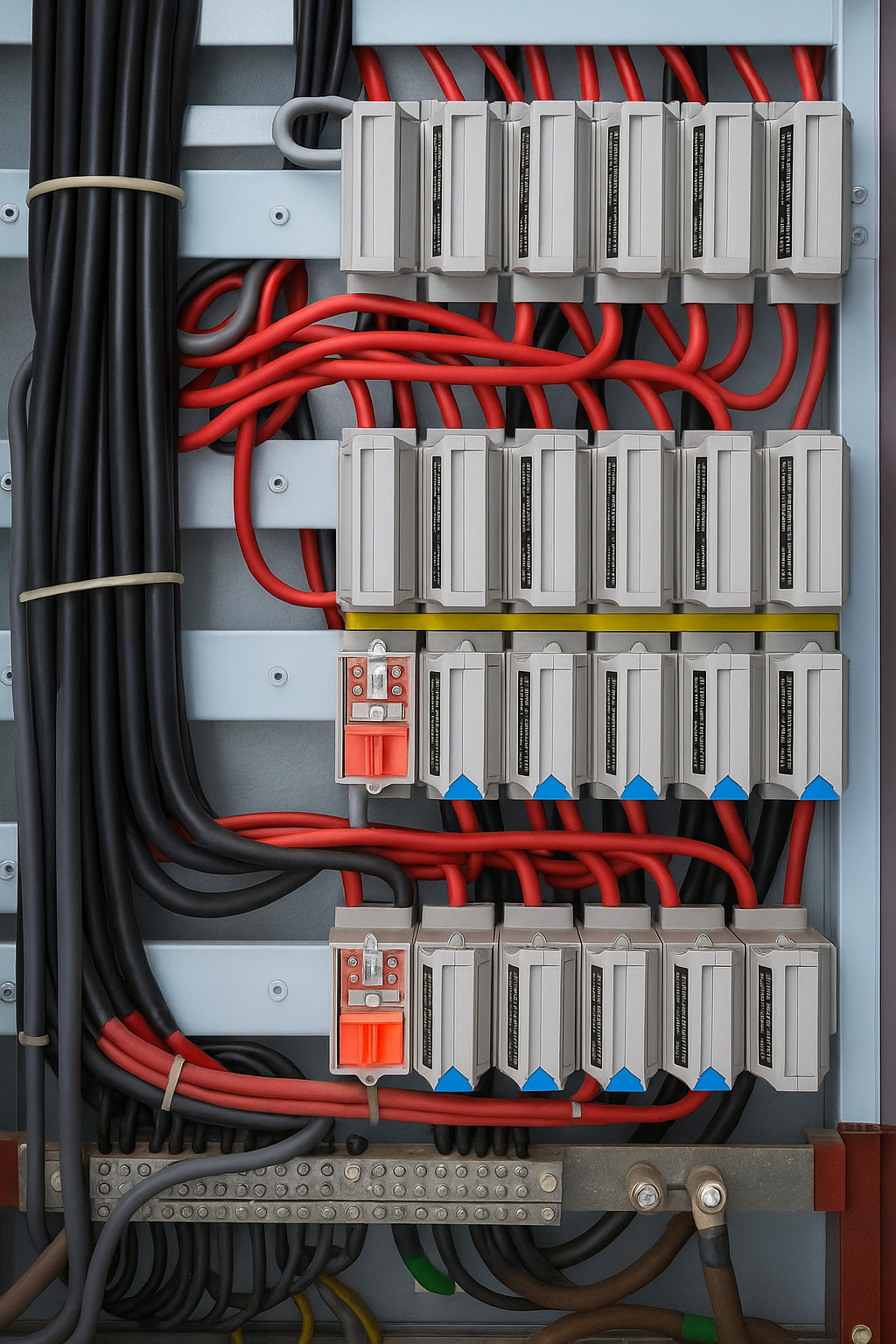
Are You Affected by the BNO Process?

BNO Examples
Important Notes on BNO Network Drawings and Metering Arrangements
Metering Responsibities:
The drawings in this section are diagrammatic and illustrative, representing typical arrangements only. Not all equipment shown will be required in every installation.
Variations to suit specific Distribution Network Operator (DNO) practices are permitted. Developers should engage with the DNO at the earliest possible stage to agree on the correct arrangement for their project.
The use of alternative or novel equipment types—such as rising main distribution boards with integrated “J” type fuseways—is not excluded by the examples shown and may be considered where appropriate.
All configurations are subject to formal approval by the DNO. Regardless of the chosen arrangement, the Building Network Operator (BNO) Network must comply with BS 7671 (IET Wiring Regulations).
Settlement Metering – Responsibility of the Electricity Supplier
Boundary Metering – Responsibility of the DNO
Difference Metering – Responsibility of the Electricity Supplier