
Electric Vehicle Installation
Charging Ahead: Electric Cars | Charging into the Future
Electric vehicle (EV) installation covers multiple areas, including charging station setup, EV component installation, and charging infrastructure development. Below, we explore each aspect in detail, including processes, costs, and key considerations.

Government Targets and Policies
The UK government has set ambitious goals for reducing emissions, including a ban on the sale of new petrol and diesel cars by 2040.
This policy aims to encourage the adoption of cleaner transportation options and significantly cut the carbon footprint of road travel. Additionally, the UK aims to achieve net-zero carbon emissions by 2050, and EVs are expected to play a major role in reaching this target.
This policy aims to encourage the adoption of cleaner transportation options and significantly cut the carbon footprint of road travel. Additionally, the UK aims to achieve net-zero carbon emissions by 2050, and EVs are expected to play a major role in reaching this target.
Environmental Benefits of EVs
One of the most significant advantages of electric cars is their ability to reduce air pollution. Unlike petrol and diesel vehicles, EVs produce no tailpipe emissions, meaning they do not emit harmful pollutants such as nitrogen oxides (NOx) and particulate matter (PM), which contribute to respiratory diseases and other health issues. By replacing conventional cars with electric alternatives, cities can improve air quality and create healthier environments for their residents.
Full installation and support
Cheaper to run and maintain
Not only are they cheaper to run than traditional cars, they are also very reliable and require very little maintenance. Pure Electric vehicles pay zero road tax. Nothing. Nada. It’s based on emissions, and they don’t have an exhaust, so it had to be zero.
Expanding charging infrastructure
The UK’s public charging networks have grown massively over recent years, from 30 Rapid chargers in 2011, to over 3,200 rapid chargers in 2020. Overall, there are now over 11,600 charger locations in the UK, and this number is increasing by around 400 chargers per month.
Home charger installation
Charging at home whilst parked, the process of refuelling takes seconds (just plug in and walk away!). By charging overnight, your car will always be ready for the next day with a full battery. 95% of EV owners charge at home 98% of the time. It’s only for those extra-long journeys from time-to-time that you’d need to stop to charge en-route.
Smooth and Comfortable
Electric vehicles (EVs) offer a far smoother and quieter driving experience compared to internal combustion engine (ICE) cars. Their instant torque delivery means there’s no delay when accelerating, making them feel more responsive on the road.
To put EV performance into perspective, the Nissan LEAF—one of the most popular electric cars—has torque comparable to a 3.5-litre V6 engine, which is impressive for a compact hatchback. This means EVs can deliver powerful acceleration without the noise and emissions of a traditional petrol or diesel engine.
To put EV performance into perspective, the Nissan LEAF—one of the most popular electric cars—has torque comparable to a 3.5-litre V6 engine, which is impressive for a compact hatchback. This means EVs can deliver powerful acceleration without the noise and emissions of a traditional petrol or diesel engine.
Despite this strong performance, EVs are incredibly efficient. The cost of charging an EV is significantly lower than refueling a petrol or diesel car. In fact, the running cost of an EV can be equivalent to a petrol vehicle achieving around 300 miles per gallon (mpg), making them much more economical in the long run.

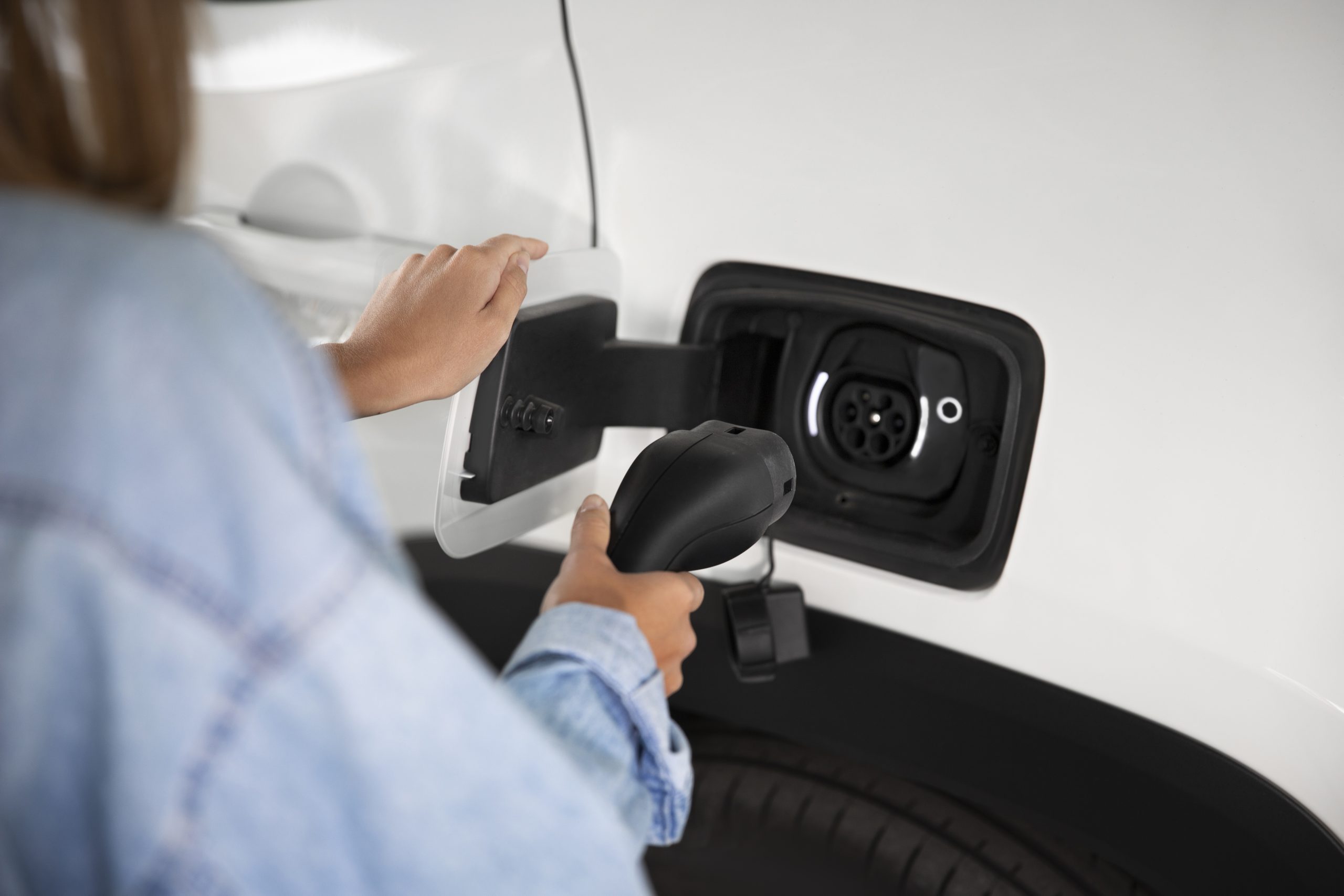
Environment friendly and no emissions
A breakdown of how electric and hybrid vehicles contribute to cleaner cities and greater efficiency. Here’s a deeper look at their benefits and how they fit into the broader effort to reduce emissions.
Electric Vehicles (EVs) – Zero Emissions & Cleaner Energy
Electric Vehicles (EVs) – Zero Emissions & Cleaner Energy
One of the biggest advantages of full-electric vehicles (EVs) is that they produce no tailpipe emissions. Unlike petrol or diesel cars, which release harmful pollutants like nitrogen oxides (NOx) and particulate matter (PM), EVs run solely on electricity, reducing air pollution and improving urban air quality.
Even when accounting for the electricity used to charge them, EVs are still much cleaner than fossil fuel vehicles. As the national grid becomes greener—with more wind, solar, and hydroelectric power—"wheel-to-well" emissions continue to decrease, making EVs even more environmentally friendly.
For those who want to go a step further, solar panels can be installed at home to charge EVs, allowing for emission-free driving while reducing energy costs. This means you can drive on sunshine—completely free of pollution!